
Pediatric Sedation Dentistry in San Marcos, TX
When Pediatric Dental Sedation May Help Your Child Complete Care
Some children cannot complete necessary dental treatment with reassurance and communication techniques alone. Significant anxiety, sensory sensitivity, a strong gag reflex, limited cooperation, or a longer procedure may make the appointment difficult. Pediatric sedation dentistry in San Marcos, TX can help selected children remain calmer and better able to tolerate needed care.
At Springtown Pediatric Dentistry, Dr. Christina Mueller reviews your child’s health, dental needs, previous experiences, anxiety level, and ability to cooperate before discussing sedation. She recommends it only when the expected benefit outweighs the risks and simpler behavior-support methods are unlikely to be enough.
Which Children May Benefit From Sedation Dentistry?
Sedation may be considered for children with severe dental fear, a strong gag reflex, difficulty remaining still, or a previous experience that makes treatment hard to tolerate. Younger children who need involved restorative care may also benefit when they cannot follow instructions for the full appointment. For children receiving special needs pediatric dentistry, Dr. Mueller considers communication, sensory adjustments, caregiver support, and ways to make care manageable before discussing sedation.
Sedation may also be discussed when a child needs several procedures or treatment such as pediatric pulp therapy or a pediatric dental crown. Dr. Mueller reviews the amount of care, the child’s health, anxiety, and ability to cooperate before deciding whether sedation is appropriate. A diagnosis or longer procedure alone does not automatically mean medication is needed for dental care.
How Dr. Mueller Builds a Sedation Plan Around Your Child
1
Individual Evaluation
Dr. Mueller considers your child’s medical history, emotional development, anxiety, previous dental behavior, treatment needs, and ability to communicate before discussing sedation.
2
Least Intensive Appropriate Support
Sedation is not automatically the first option. Dr. Mueller considers communication techniques, shorter appointments, gradual desensitization, and other approaches before recommending additional medication support.
3
Clear Risks, Benefits, and Alternatives
Parents receive an explanation of why sedation is being considered, what alternatives are available, what preparation is required, and what side effects or limitations may occur before giving consent.
4
Monitoring Through Recovery
Planning continues throughout treatment and recovery. Dr. Mueller follows the child’s response, confirms that appropriate recovery criteria are met, and provides instructions for supervision at home.
Meet the Pediatric Dentist Who Understands Kids
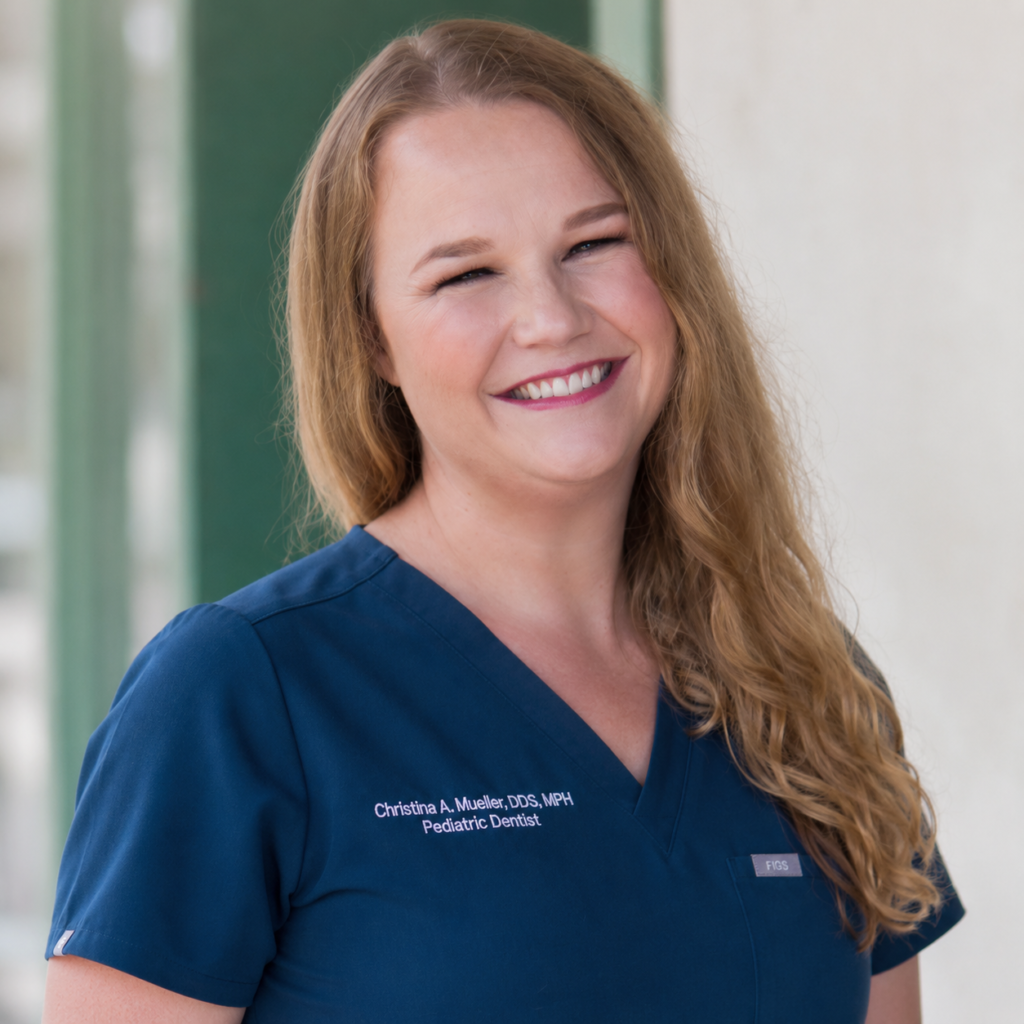
Dr. Christina A. Mueller, DDS, MPH, is a board-certified pediatric dentist and founder of Springtown Pediatric Dentistry in San Marcos. A sixth-generation Texan and second-generation pediatric dentist, she studied mathematics and biology at Southern Methodist University, competed in collegiate discus, earned public health training, and completed advanced pediatric dental education.
Her prevention-focused, relationship-centered approach considers each child’s health history, anxiety, developmental needs, airway, and ability to complete treatment safely. As both a pediatric dentist and mother, Dr. Mueller understands how carefully parents weigh sedation. She explains why it may or may not be appropriate, reviews available alternatives, and plans care around the least intensive support that can reasonably help a child complete needed treatment.


Signs It May Be Time to Discuss Dental Sedation
Not every nervous child needs sedation. Many children can complete care with tell-show-do, clear explanations, positive reinforcement, distraction, short appointments, or gradual introductions. Sedation becomes a reasonable discussion when those methods are unlikely to support safe and effective treatment.
No child should have to endure a stressful dental experience when a safe, effective alternative exists; reach out to our San Marcos office and let Dr. Mueller help determine whether sedation dentistry is the right next step for your child.
During pediatric dental exams, Dr. Mueller identifies the treatment needed and discusses behavior-support options, sedation, alternatives, and the possible effects of delaying care.
How We Prepare for a Pediatric Sedation Appointment
A sedation visit begins well before treatment day. Dr. Mueller provides instructions based on your child’s planned care and health history. Parents should follow these directions exactly and contact the office when anything changes.
A responsible adult should supervise your child and follow the written instructions provided by the office. Seek urgent medical help if your child has trouble breathing, cannot be awakened normally, develops unusual skin color, or has another serious reaction.


Why Families Love Springtown Pediatric Dentistry
Pediatric Sedation Dentistry FAQs for Parents
Conveniently Located Near San Marcos, TX
Springtown Pediatric Dentistry is located at 310 Stagecoach Trail, Suite 1000, San Marcos, TX 78666. We welcome infants, children, teens, and children with special healthcare needs from San Marcos, Kyle, New Braunfels, Wimberley, Martindale, Maxwell, Uhland, Redwood, and Staples.
Whether your child is visiting for preventive care, a dental concern, or more involved treatment, Dr. Mueller and our team provide clear guidance and personalized care at every step. Our goal is to make each visit comfortable for children and reassuring for parents while supporting healthy smiles through every stage of growth.