Pediatric Dental Sealants in San Marcos, TX
How Dental Sealants Protect Your Child’s Back Teeth
Pediatric dental sealants are a preventive treatment designed to protect children’s molars from tooth decay. Applied to the chewing surfaces of cavity-prone teeth, sealants create a protective barrier that helps keep food particles and bacteria out of deep grooves that are difficult to clean with brushing alone.
Pediatric dental sealants in San Marcos cover those grooves with a thin protective coating. Dr. Christina Mueller recommends them tooth by tooth, based on groove depth, enamel condition, cavity history, and how easily your child can keep the area clean. Sealants support daily brushing; they do not replace it.
Which Teeth Should Be Considered for Sealants?
The first and second permanent molars are commonly considered for sealants because their broad chewing surfaces often contain deep grooves. Dr. Mueller examines each newly erupted tooth during a pediatric dental exam and decides whether the groove pattern and cavity risk make sealing worthwhile.
Some baby molars may also benefit when they have deep pits or are expected to remain in place for several more years. Healthy baby teeth support eating, speech, and the spacing needed for permanent teeth, so protecting a high-risk primary molar can sometimes be appropriate. the decision is not based on age alone. A shallow, easy-to-clean tooth may not need a sealant, while another tooth in the same mouth may have deep grooves that would benefit from added protection.
Meet the Pediatric Dentist Who Understands Kids

Dr. Christina A. Mueller, DDS, MPH, is a board-certified pediatric dentist and founder of Springtown Pediatric Dentistry in San Marcos. A sixth-generation Texan and second-generation pediatric dentist, she studied mathematics and biology at Southern Methodist University, competed in collegiate discus, earned public health training, and completed advanced pediatric dental education.
Her prevention-focused, relationship-centered approach considers each child’s teeth, growth, airway health, comfort, and overall well-being. As both a pediatric dentist and mother, Dr. Mueller understands parents’ trust. She creates a calm dental home where children feel safe, families feel heard, and healthy habits can begin early and last through childhood.

How to Keep Your Child’s Sealants in Good Condition
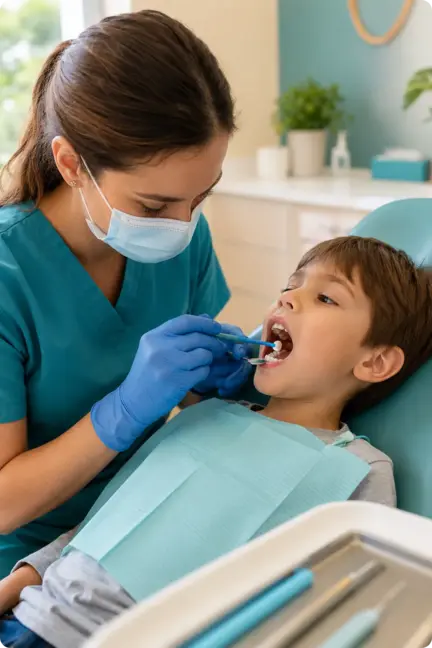
Dental sealants are durable, but they do require some care to stay effective over time. With the right habits at home and consistent checkups at our office, most sealants can remain intact and fully protective for many years. Here are a few simple ways to help your child get the most out of their sealants.
From start to finish, the entire process is designed to be gentle, efficient, and as comfortable as possible. Most children are in and out before they know it, and many leave looking forward to their next visit. A little consistency at home and a commitment to regular checkups go a long way. Together, they give your child’s sealants the best possible chance of delivering full protection for years to come.
Which Children Are Most Likely to Benefit? From Sealants?
Sealants may be especially useful for children with deep molar grooves, a history of cavities, inconsistent brushing, or difficulty cleaning the back teeth. Children with braces, sensory challenges, limited hand coordination, or certain dietary habits may also have areas that are harder to keep plaque-free.
A child does not need to have previous cavities to be considered. Dr. Mueller may recommend sealing a healthy permanent molar soon after it has fully emerged if its shape makes it likely to trap food. Sealants and fluoride serve different purposes. Sealants cover selected chewing grooves, while fluoride treatments strengthen exposed enamel across more tooth surfaces. Dr. Mueller may recommend one or both based on your child’s needs.

How We Apply Pediatric Dental Sealants: Step by Step
1
Cleaning and Drying the Tooth
The tooth is cleaned to remove plaque and debris from the chewing surface. It is then kept dry so the sealant can attach properly
2
Conditioning the Enamel
A gentle conditioning solution is applied to the chewing surface of the tooth to create a slightly rougher texture. This step helps the sealant material adhere more effectively to the enamel so it stays firmly in place once applied.
3
Placing the Sealant
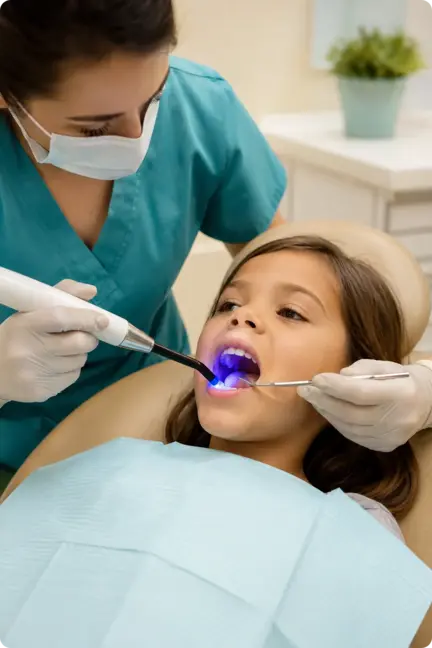
Dr. Mueller or a team member carefully paints the liquid sealant material directly onto the grooves and pits of the tooth. The material flows into every crevice, filling in the areas where food and bacteria are most likely to collect.
4
Curing & Checking the Fit
A small curing light is used to harden the sealant in place within just a few seconds. Dr. Mueller then checks the bite to make sure everything feels comfortable and natural before your child leaves the chair.
Why Families Love Springtown Pediatric Dentistry
Dental Sealant Questions Parents Often Ask
Conveniently Located Near San Marcos, TX
Springtown Pediatric Dentistry is located at 310 Stagecoach Trail, Suite 1000, San Marcos, TX 78666. We welcome infants, children, teens, and children with special healthcare needs from San Marcos, Kyle, New Braunfels, Wimberley, Martindale, Maxwell, Uhland, Redwood, and Staples.
Whether your child is visiting for preventive care, a dental concern, or more involved treatment, Dr. Mueller and our team provide clear guidance and personalized care at every step. Our goal is to make each visit comfortable for children and reassuring for parents while supporting healthy smiles through every stage of growth.