Baby Tooth Cavities: Why Decay Spreads Faster Than You Think
Many parents are surprised when they discover cavities in baby teeth because they often assume temporary teeth are less important. However, baby tooth decay can develop quickly and affect a child’s comfort, eating habits, and future dental health if it is ignored.
Young children’s teeth face daily exposure to food, drinks, and bacteria, and small changes can sometimes turn into bigger problems faster than parents expect. Understanding why cavities spread, what warning signs to look for, and how to prevent them can help protect your child’s growing smile.
Why Cavities In Baby Teeth Spread Faster
Baby teeth are smaller and more delicate than adult teeth, which means damage can progress quickly once the protective surface becomes weakened. Toddlers also have habits, such as frequent snacking or sipping drinks throughout the day, that can increase cavity risk.
The earlier parents understand the causes behind toddler cavities, the easier it becomes to create healthy routines and prevent small problems from becoming larger ones.
Baby Teeth Need Extra Protection
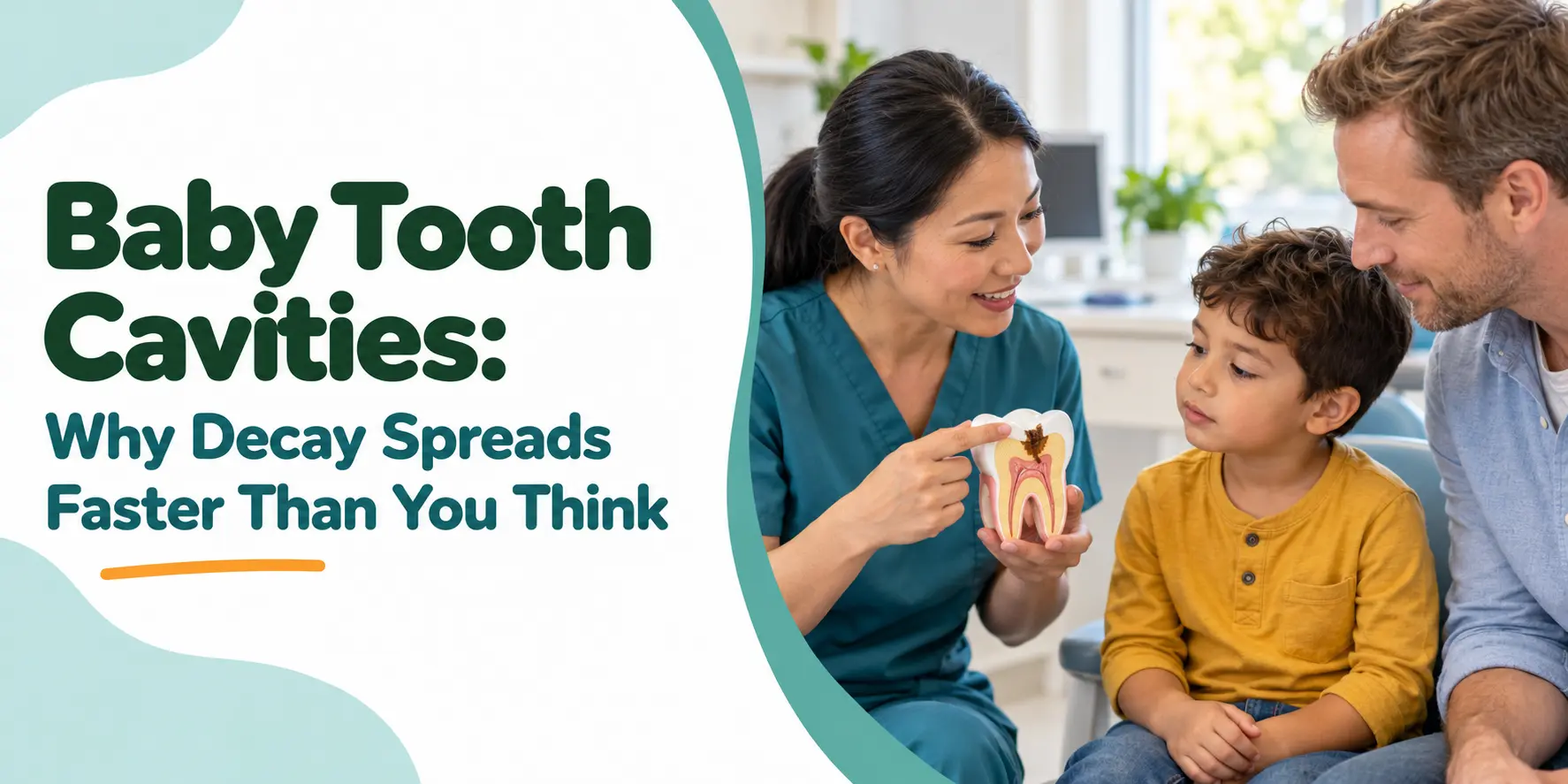
Baby teeth have a thinner outer layer compared with adult teeth. Because of their smaller size, cavities can move deeper into the tooth more quickly when they are not noticed early.
A tiny white spot or early change in appearance may seem harmless, but it can be the first sign that the tooth needs attention. Regular dental visits help identify these changes before they become more serious.
Daily Habits Can Speed Up Decay
Frequent exposure to sugar gives cavity-causing bacteria more opportunities to affect teeth. For example, allowing a toddler to sip juice throughout the day or regularly having sweet snacks between meals can increase the chances of baby tooth decay.
Small adjustments, such as offering water between meals and keeping sugary foods limited to occasional treats, can make a meaningful difference.
Causes Of Baby Tooth Decay
Understanding what causes cavities in toddlers helps parents focus on the habits that matter most. Cavities usually develop when bacteria, food particles, and frequent sugar exposure combine over time.
Sugary Drinks And Snacks
Juice, sweetened drinks, candies, and sticky snacks can leave sugar on teeth for longer periods. This creates an environment where bacteria can produce acids that weaken the tooth surface.
Instead of frequent snacking, try offering balanced meals and snacks at set times. This gives your child’s mouth more time to recover between eating occasions.
Brushing Challenges In Toddlers
Many toddlers lack the coordination needed to brush their teeth effectively, so parents should assist with brushing until children can clean all tooth surfaces independently. Establishing a consistent brushing routine and using age-appropriate fluoride toothpaste can help reduce the risk of early childhood caries.
The American Academy of Pediatric Dentistry (AAPD) recommends early dental visits and preventive care to support children’s oral health.
Bedtime Milk And Bottle Habits
Letting children fall asleep with milk or other drinks can expose teeth to sugars for an extended period. During sleep, saliva production decreases, reducing the mouth’s natural ability to wash away food particles.
Creating a bedtime routine that includes brushing after the final drink can help protect young teeth.
Signs Of Cavities In Toddlers
Cavities in toddlers are not always obvious at the beginning. Parents should regularly check their child’s teeth and watch for changes.
Some common signs include:
- White spots or chalky areas on teeth
- Brown or dark marks
- Visible holes or rough areas
- Sensitivity when eating
- Avoiding certain foods
- Complaints of tooth discomfort
If you notice these changes, scheduling a dental visit can help determine the right next step. Springtown Pediatric Dentistry provides gentle children’s dental exams to monitor oral health and identify concerns early.
Why Baby Teeth Still Matter
A common question parents ask is, “Why treat cavities if baby teeth eventually fall out?” Baby teeth play important roles while children grow.
They help children chew comfortably, support clear speech development, and maintain space for permanent teeth. Ignoring decay can lead to discomfort and may create unnecessary challenges during childhood.
Dr. Christina A. Mueller helps families understand why protecting baby teeth matters and guides parents in making informed decisions about their child’s dental care needs.
Waiting Can Create Bigger Problems
A small cavity may become more difficult to manage if it continues to grow. Children with untreated tooth decay may experience discomfort while eating, sleeping, or participating in daily activities.
Early care allows pediatric dentists to address problems while keeping treatment as simple and comfortable as possible. Options such as pediatric restorative care can help repair damaged teeth while supporting healthy development.
How To Prevent Toddler Cavities
Preventing baby tooth decay starts with simple daily habits. Parents do not need complicated routines; consistency is the most important factor.
Start Healthy Brushing Early
Begin cleaning your child’s teeth as soon as the first tooth appears. Make brushing part of the morning and bedtime routine so it becomes a normal habit.
Parents should supervise brushing and make sure all areas of the mouth are cleaned, especially the back teeth where food can easily collect.
Build Better Food And Drink Habits
Healthy choices throughout the day can lower cavity risk. Helpful habits include:
- Choosing water between meals
- Limiting sugary snacks
- Avoiding frequent sipping of sweet drinks
- Offering tooth-friendly foods
Schedule Regular Dental Visits
Early dental visits allow problems to be found before they become more advanced. They also help children become comfortable with dental care from a young age.
Dr. Christina A. Mueller works with parents to create preventive plans that fit each child’s needs and helps families understand how everyday habits influence oral health.
Why Choose Springtown Pediatric Dentistry?
Springtown Pediatric Dentistry provides child-focused dental care designed around comfort, prevention, and healthy habits. The team helps parents understand cavity prevention and supports children through every stage of dental growth.
Common Questions About Toddler Cavities
Can A 1-Year-Old Get Cavities?
Yes, a 1-year-old can develop cavities if teeth are frequently exposed to sugars or are not cleaned properly. Early brushing, healthy habits, and dental checkups help prevent cavities from starting.
Why Does My Toddler Have Cavities Even Though I Brush?
Toddlers can still develop cavities because brushing technique, frequent snacks, sugary drinks, and hidden sugar exposure also affect tooth health. Parents may need to adjust daily routines.
Can Baby Tooth Decay Affect Adult Teeth?
Untreated baby tooth decay may affect a child’s comfort and oral development. Protecting baby teeth helps maintain healthy habits and supports the proper development of permanent teeth.
How Quickly Can Cavities Spread In Baby Teeth?
Cavities in young children can progress quickly because baby teeth have smaller structures and thinner protective layers. Early dental evaluation helps prevent minor issues from becoming larger concerns.
Are Cavities In Baby Teeth Preventable?
Yes, many cavities can be prevented with regular brushing, balanced eating habits, fluoride use, and routine pediatric dental visits. Consistent daily care is the best protection.
