Pediatric restorative dentistry in San Marcos, TX

What Is Pediatric Restorative Dentistry?

Pediatric restorative dentistry in San Marcos, TX focuses on repairing teeth that have already been affected by decay, injury, infection, or structural damage. The goal is not simply to cover a problem. Dr. Christina Mueller first determines whether the tooth can be predictably restored, how much healthy structure remains, and how keeping the tooth may benefit your child.

At Springtown Pediatric Dentistry, treatment decisions also consider whether the tooth is primary or permanent, your child’s age, symptoms, dental development, and how long the tooth is expected to remain in the mouth. This helps Dr. Mueller choose care that fits the specific tooth rather than using the same solution for every cavity or injury.

When decay, a fracture, or another problem weakens a tooth, restorative treatment can rebuild the damaged area and help the tooth function during chewing. The type of repair depends on how much healthy structure remains.

Baby teeth support eating, speech, and spacing for permanent teeth. When a damaged primary tooth can be restored predictably, keeping it in place may be more useful than removing it too early.

Decay or injury can sometimes extend beyond the outer surface and affect the tissue inside the tooth. Dr. Mueller evaluates how deep the problem goes before deciding whether treatment such as pulp therapy is appropriate.

A small area of damage and a severely weakened tooth should not receive the same treatment. Dr. Mueller considers the tooth’s condition, location, remaining structure, and expected lifespan before recommending how it should be restored.

Why Choose Us for Pediatric Restorative Dentistry in San Marcos?

Restorative care at Springtown Pediatric Dentistry begins with one question: what does this tooth actually need? Dr. Christina Mueller looks at the amount of healthy tooth structure left, the depth of decay or injury, your child’s age, and how long the tooth should remain in place. She recommends treatment only when repairing the tooth offers a clear benefit for comfort, function, or development during your child’s current stage of growth.

Parents receive a clear explanation of what Dr. Mueller found, why a crown or pulp treatment may be considered, and what alternatives exist. Her approach is conservative and child-focused, with attention to preserving useful tooth structure, avoiding unnecessary treatment, and choosing care that makes sense for the specific tooth rather than automatically following the same treatment plan for every child.

Pediatric Restorative Dentistry Services We Offer

1

Pediatric Dental Crowns

When decay, a fracture, or structural weakness affects too much of a tooth for a smaller repair to hold reliably, a pediatric dental crown can provide full coverage. Dr. Mueller considers the tooth’s condition, location, and expected lifespan before recommending a crown to restore strength and everyday function while chewing.

2

Pediatric Pulp Therapy

When decay or injury reaches the soft tissue inside a tooth, pediatric pulp therapy may help preserve a tooth that can still be restored. Dr. Mueller evaluates the pulp, roots, surrounding bone, and remaining tooth structure before deciding whether treatment can keep the tooth functional and comfortable during daily use.

Meet the Pediatric Dentist Who Understands Kids

Dr. Christina A. Mueller, DDS, MPH, is a board-certified pediatric dentist and founder of Springtown Pediatric Dentistry in San Marcos. A sixth-generation Texan and second-generation pediatric dentist, she studied mathematics and biology at Southern Methodist University, competed in collegiate discus, earned public health training, and completed advanced pediatric dental education.

Her restorative approach starts with understanding what happened to the tooth and whether preserving it offers a meaningful benefit. Dr. Mueller considers the amount of healthy structure remaining, the child’s age, the permanent tooth developing below, and the available alternatives. She explains these factors clearly so parents understand why treatment is recommended and why, in some situations, monitoring or removal may make more sense.
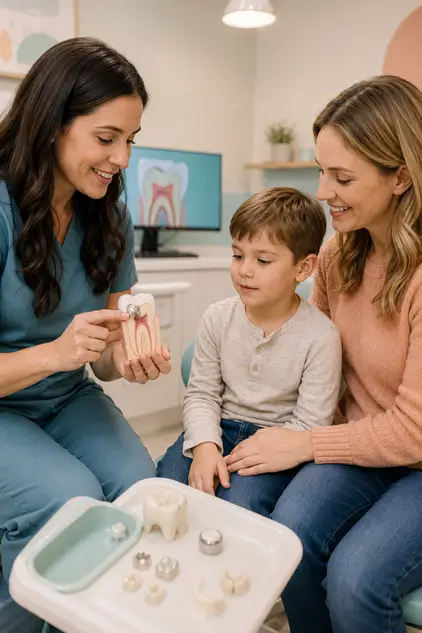

Pediatric dentist explaining a dental crown to a child and parent before restorative treatment

Benefits of Pediatric Restorative Dentistry for Children

Restorative care is most useful when it solves a specific problem without doing more treatment than the tooth needs. Depending on the condition, treatment may restore comfortable function, protect weakened structure, or allow a baby tooth to remain useful while your child continues to grow.

  • Helps Children Eat More Comfortably: A painful, fractured, or badly decayed tooth can make a child avoid chewing on one side or certain foods. Treating the source of the problem can help restore normal use of the tooth.
  • Keeps Restorable Baby Teeth in Place: When enough healthy structure remains, restoring a baby tooth may allow it to continue holding space and supporting chewing until it is naturally ready to fall out.
  • Protects Baby and Permanent Teeth: Baby teeth help children chew, speak, and hold space for permanent teeth. Preventive care protects these early teeth while also monitoring the adult teeth that are developing, erupting, and becoming part of your child’s long-term bite.
  • Strengthens Teeth That Have Lost Structure: Large areas of decay or damage can leave a tooth vulnerable to further breakdown. Full-coverage restorations can protect the remaining structure when a smaller repair would not provide dependable support.
  • Can Reduce the Chance of an Urgent Problem Later: Treating a restorable tooth before pain or infection worsens may prevent the problem from becoming more difficult to manage. If your child already has severe pain, facial swelling, or an injury, our pediatric emergency dentistry service is the more appropriate place to start.

Our Restorative Dentistry Process for Kids in San Marcos
  • Finding Out How Much of the Tooth Is Affected: Dr. Mueller asks about pain, sensitivity, injury, previous treatment, and when the problem began. She then examines the tooth, gums, bite, and surrounding area to understand how much damage is present.
  • Looking Below the Surface When Needed: Some decay, root changes, infection, and injuries cannot be judged from appearance alone. When imaging is clinically useful, pediatric dental X-rays can help Dr. Mueller evaluate the roots, surrounding bone, depth of damage, and developing permanent teeth.
  • Choosing Whether to Restore, Monitor, or Remove the Tooth: Dr. Mueller weighs the remaining healthy structure, infection, symptoms, tooth position, and expected time before a baby tooth naturally falls out. She explains whether restoring the tooth offers a predictable benefit or whether another approach makes more sense.
  • Completing Treatment and Planning Follow-Up: Once the treatment plan is clear, Dr. Mueller restores the tooth using the appropriate approach. Children who have significant anxiety or difficulty completing necessary care may also be evaluated for pediatric sedation dentistry when additional support is clinically appropriate.
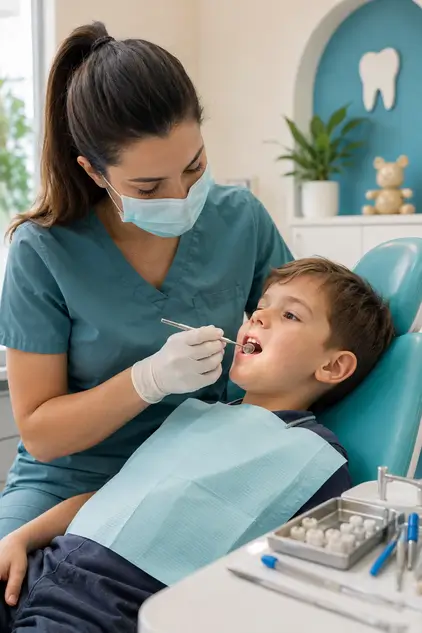
Pediatric dentist examining a child’s damaged tooth during a restorative dental visit

Why Families Love Springtown Pediatric Dentistry

Pediatric Restorative Dentistry FAQs for Parents

A baby tooth may still need treatment if keeping it helps your child chew comfortably, maintain space, or avoid infection. Dr. Mueller also considers how soon the tooth is expected to fall out before recommending restoration.

A crown may be recommended when a tooth has lost too much structure for a smaller repair to provide dependable protection. Dr. Mueller considers the amount of damage, tooth location, remaining enamel, and expected lifespan of the tooth.

Many treated baby molars need full coverage because deep decay and pulp treatment can leave the tooth weakened. The final decision depends on which tooth was treated and how much healthy structure remains.

No. Some teeth are too damaged, infected, unstable, or close to naturally falling out to benefit from restorative treatment. Dr. Mueller will explain when preserving the tooth is realistic and when removal may be the better option.

Help your child brush twice daily with fluoride toothpaste, floss between touching teeth, and limit frequent sugary snacks and drinks. Regular pediatric dental exams also allow Dr. Mueller to check existing restorations and identify new concerns early.

Conveniently Located Near San Marcos, TX

Springtown Pediatric Dentistry is located at 310 Stagecoach Trail, Suite 1000, San Marcos, TX 78666. We welcome infants, children, teens, and children with special healthcare needs from San Marcos, KyleNew BraunfelsWimberleyMartindaleMaxwellUhlandRedwood, and Staples.

Whether your child is visiting for preventive care, a dental concern, or more involved treatment, Dr. Mueller and our team provide clear guidance and personalized care at every step. Our goal is to make each visit comfortable for children and reassuring for parents while supporting healthy smiles through every stage of growth.